
Screen time, sleep, and brain health: What you need to know
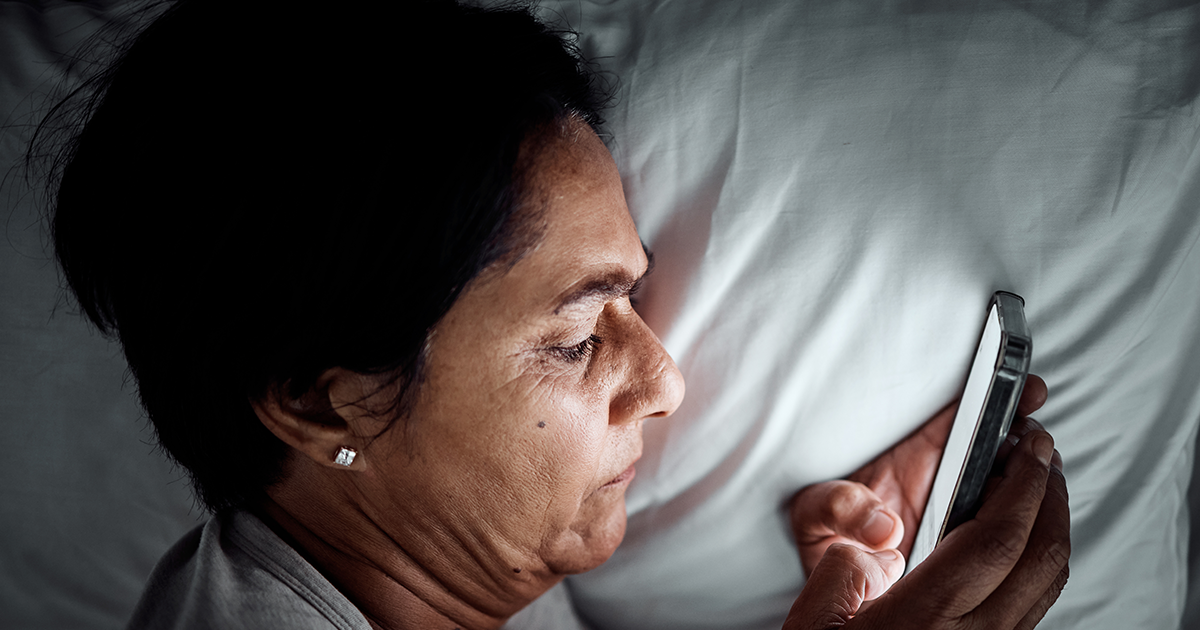
Screens are part of everyday life. Phones, tablets, computers, and TVs can help with working, learning, relaxing, and staying connected.
But too much screen time—especially before bed—can make it harder to get good sleep. Poor sleep may affect your memory, mood, and thinking over time. [1,2]
You don't have to stay away from screens altogether to stay healthy. A few simple habits can help you sleep better and support a healthy brain.
Why sleep matters
Sleep gives your brain time to rest and recharge. While you sleep, your brain stores memories, clears away waste, and gets ready for a new day. Adults need about 7 to 9 hours of sleep each night for good health. [2,3]
Getting enough sleep may also help lower the risk of problems with thinking and memory as you get older. [3]
How screens affect sleep
Phones, tablets, computers, and TVs give off blue light. This light can make it harder for your body to know when it is time to sleep. Looking at screens late in the evening may make it harder to fall asleep or stay asleep. [2]
Screen time can also keep your brain active when it should be winding down.
Simple steps for better sleep and brain health
Small changes can make a big difference.
Turn off screens before bed
Try putting away phones, tablets, and laptops at least 30 to 60 minutes before bedtime. Read a book, listen to calming music, or stretch instead. [2]
Keep a regular sleep schedule
Go to bed and wake up at about the same time every day—even on weekends. [2]
Stay active during the day
Regular physical activity can help you sleep better and supports both heart and brain health. [1]
Make your bedroom sleep-friendly
Keep your room cool, dark, and quiet. Avoid large meals, alcohol, and caffeine close to bedtime. [2]
Small habits can protect your health
You do not have to give up your favorite shows or stop using your phone. The goal is balance.
Getting enough sleep, limiting screen time before bed, and staying active are simple ways to care for your brain, heart, and overall health.
Tonight, try one small change. Your brain and body will thank you.
Life’s Essential 8. American Heart Association.
Sleep Tips: 6 Steps to Better Sleep. Mayo Clinic.
Sleep and Older Adults. National Institute of Aging (NIH).